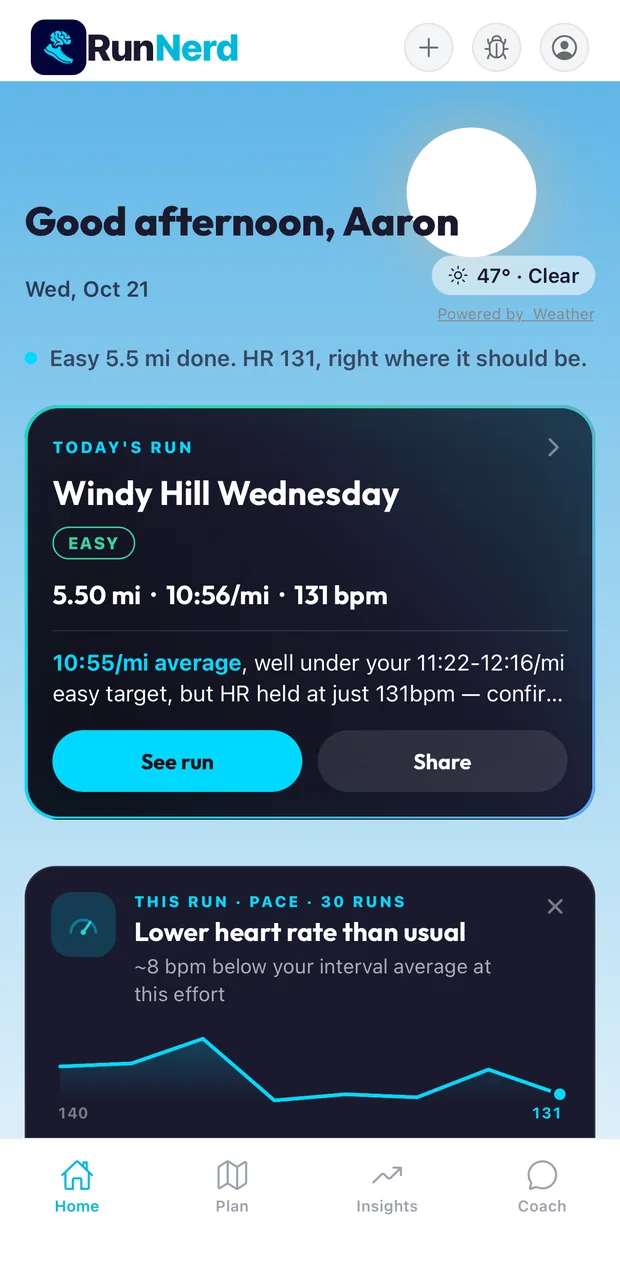
Home changes through your day, around what you have planned.
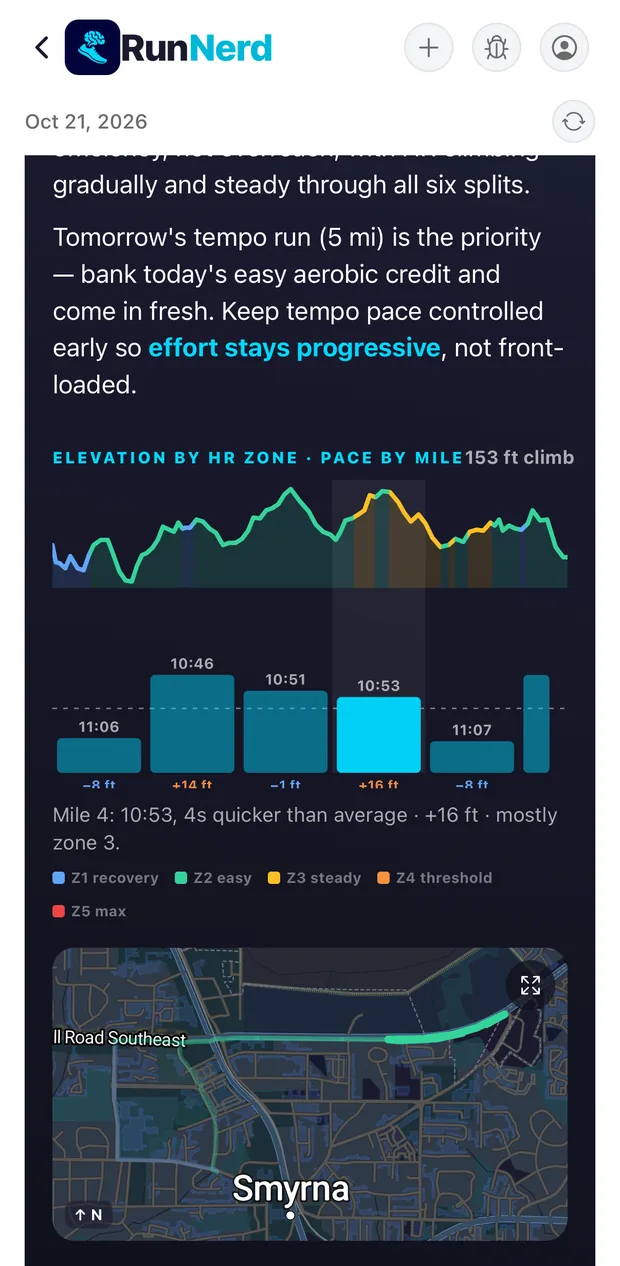
Finish a run and it lands on Home with a name of its own. Open it and the stats come first, then two short paragraphs from your coach on how it went.
Below that, elevation and pace share one chart, with your heart-rate zones colored along the hill. Tap a mile to see why it felt the way it did.
Get RunNerd on the App Store →


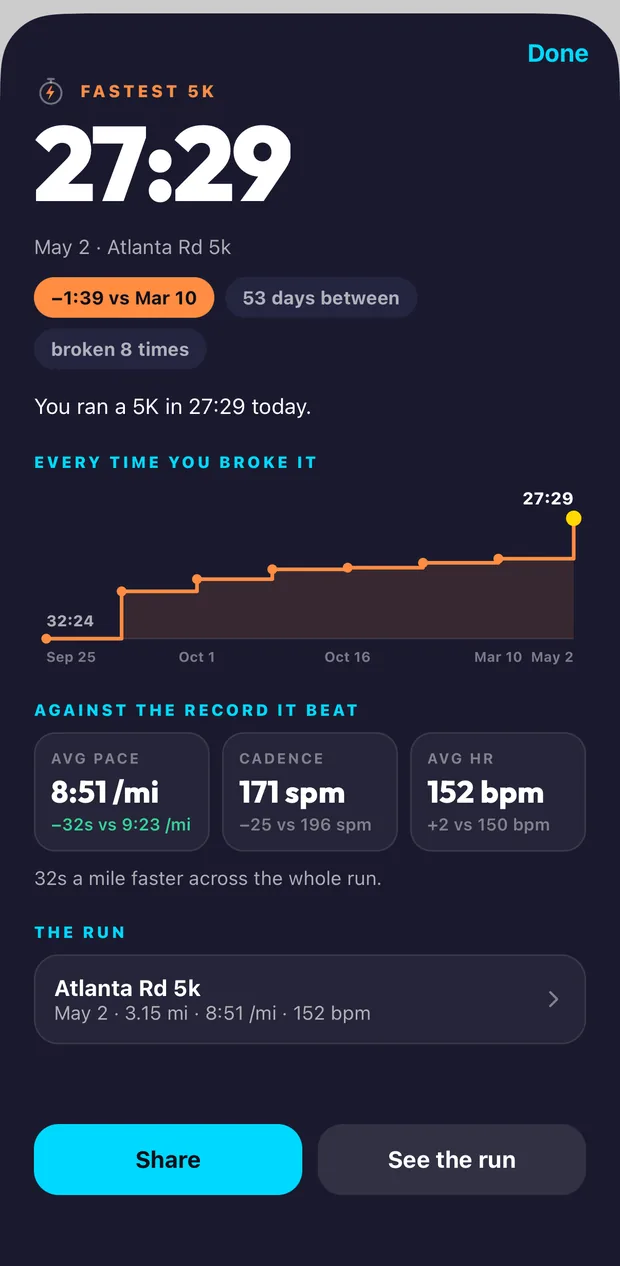
A new record shows the mark it beat, how long it stood, and every time you've broken it. Pace, cadence, and heart rate sit next to the old run, so you can see what changed.
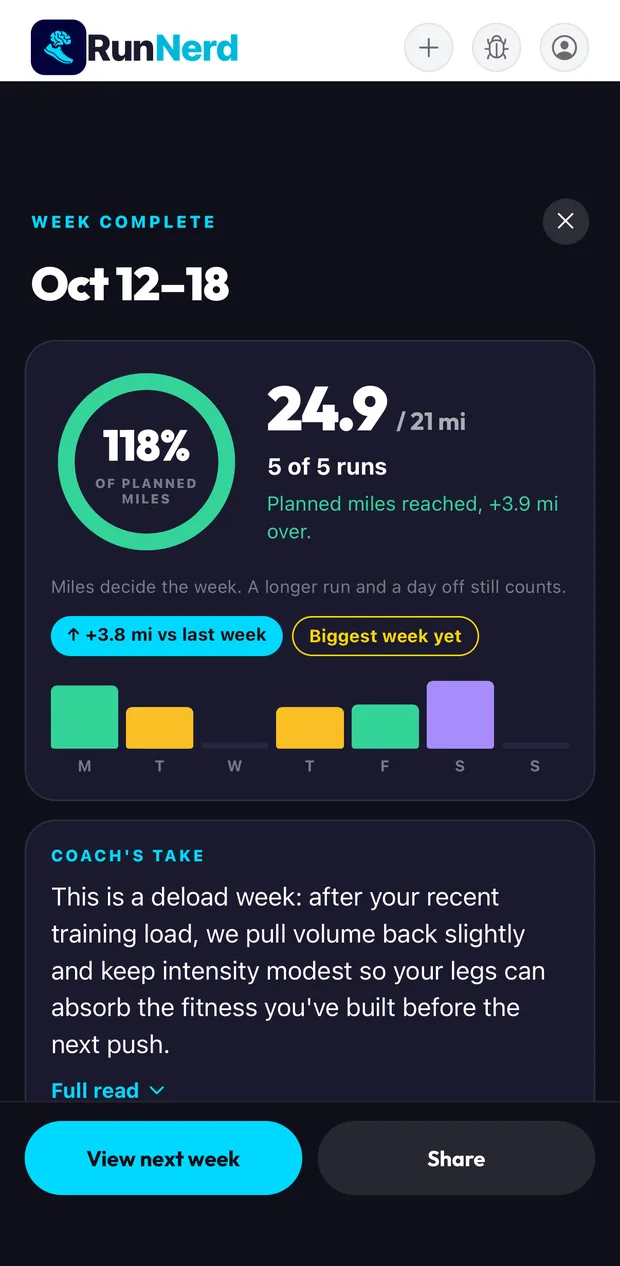
Get RunNerd on the App Store →When a week wraps up, a recap card is waiting on Home the next morning: miles against the plan, runs completed, how the week compares to the last one, and your coach's take on what comes next. Months get the same treatment.
Get RunNerd on the App Store →
From run/walk intervals to long-run efforts, the guided runs and recaps change through the week.
Fifteen weeks across Foundation, Build, Deload and Peak — then down into the days.
Track each segment, and get pace cues for each mile and rep to get the most out of each workout.
RunNerd reads across every run you've logged — pace against heart rate, zone discipline, cadence drift — and tells you what the data says together. Each insight carries its own trend line, so you can see the change it's pointing at.


Ask anything. The answers come back grounded in your own data — your last run, your last week, your injury history.
Post-run soreness peaks at 1–3 days and clears faster with easy movement than with total rest.
Above ~22°C, ditch your pace goal, run by effort or HR, and drink on a schedule before and during.
Eat 1–4g carbs per kg, 2–4 hours before the gun, and keep it boring.
Free to download. iOS only. Connect Garmin directly, or bring runs in through Apple Health from a watch, your phone, or an app like Nike Run Club or COROS. RunNerd coaches them either way.